
“Wouldn’t it be better if students could see and hear the scientists?”
This is a question we get asked from time to time. Some teachers ask about using a video component – often before they’ve experienced the text-based platform. We’re confident that text-based interaction remains the best format for effective, inclusive, online engagement.
Why? We could go on for a while, but we’ve narrowed it down to our top 3 reasons why text is best.
1. It’s inclusive
“It was really lovely to see the students feel able to ask such open and honest questions in a secure and comfortable environment – especially students who are less forthcoming.” – Jen, Teacher
With no camera or mic, there’s a level playing field for everyone to get involved. Being ‘hidden’ removes the pressure to perform.
In 2024, 16 teachers at Whitley Bay High School took part with their classes. Over just one week, 352 students got involved, asking questions to 92 different scientists.
“I have seen shy students actually get involved as questions are from them and answered to them. They don’t feel self conscious and really get something out of this.” – Sarah, Teacher
Text tackles the bias toward the loudest voices. Even the most shy students are given the confidence to engage fully and ask their questions. Every student has an equal voice to ask about the things that interest them.
2. It’s familiar
In our tech-based world, it’s tempting to assume we should all harness the power of Zoom. But engagement is a two-way street, and students prefer text. I’m a Scientist shows how science is relevant to students – why not make the communication style relevant too?
“I had underestimated how much the students loved the Chat mechanism! They really enjoyed it and I think the lack of a camera actually helped them have the confidence to ask questions.” – Duncan, Teacher
Duncan’s students’ confidence showed in how keen they were to join in on conversations. Many students participated by responding to answers their classmates had received.
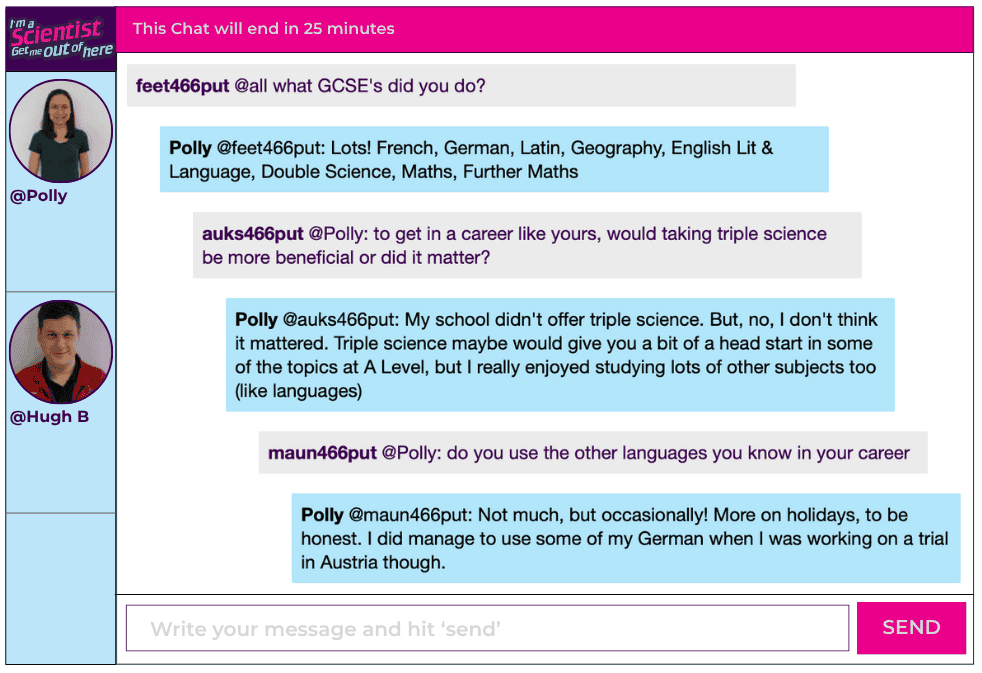
A familiar, comfortable environment boosts students’ confidence. It’s a safe, moderated, informal space to develop the communication skills they’re already using on social media, and learn how to behave appropriately online. Familiarity opens the door to students actively participating, building digital literacy, and navigating online interactions with confidence.
3. It’s engaging

In a text-based Chat, every student can have their say – at the same time. That may sound chaotic, but it’s certainly efficient! There’s no need for students to wait or take turns. Fast-paced Chats with multiple scientists and parallel conversations make for effective, impactful, and enjoyable engagement.
One student might be discussing university choices. At the same time, their friend is chatting about habitats. Separate conversations, on different topics, happening simultaneously. If these questions were asked out loud, how many would you get through in 30 minutes?
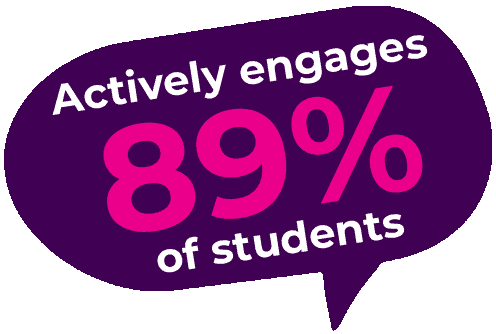
“When you bring scientists into the classroom, it’s good but you don’t have 100% engagement. This takes that away: everybody’s got questions to ask.” – Amanda, Teacher
One Year 9 student shared 21 messages about supercomputers with scientist Karen. Simultaneously, that same student was engrossed in quizzing marine biologist Rebecca about whales:
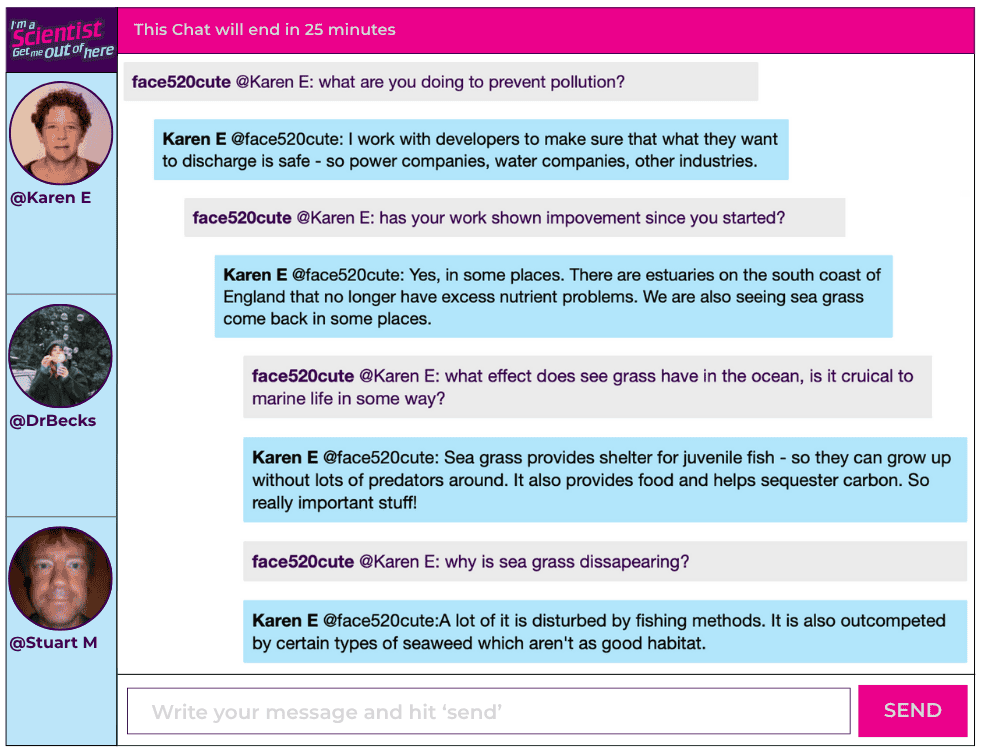
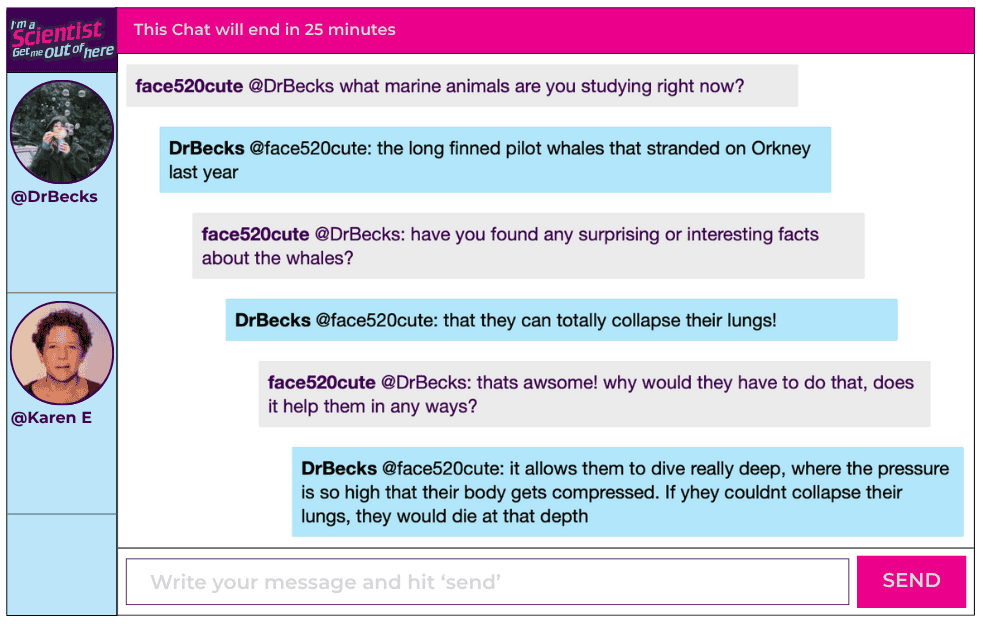
What’s more, while those conversations continued, Karen was able to respond to another 15 students! That kind of dynamic, parallel engagement simply isn’t possible in a video session, or even face-to-face.
🎓 Teachers:
Boost your students’ confidence with inclusive, engaging enrichment. Book a text-based, online Chat to connect with scientists, anytime it suits you and your class.
Book a Chat ❯
✍️ Scientists:
It’s not just students that benefit from the text-based format. Scientists can take part from anywhere with an internet connection – home, office, on site, even during a commute.
Apply to take part ❯